Mystery Snail
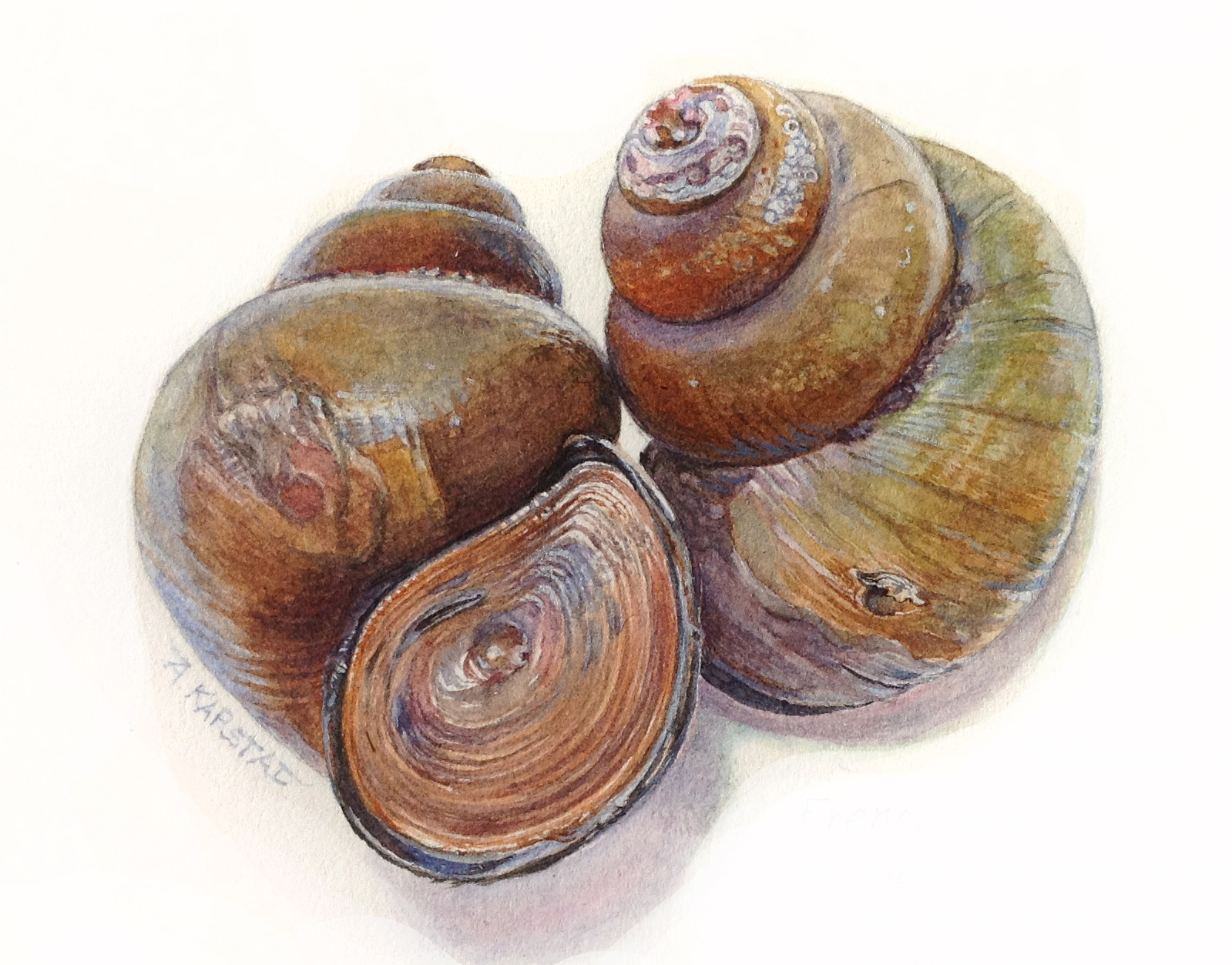
Declines in abundance of Cipangopaludina chinensis (Chinese Mystery Snail) Frederick W. Schueler & Aleta Karstad (Fragile Inheritance Natural History) and Naomi Langlois-Anderson (South Nation Conservation), background information for poster paper at the 5th Biennial Canadian Freshwater Mollusc Research Meeting, Burlington, Ontario, 15-16 November 2023. The Chinese, or Oriental, Mystery Snails ( Cipangopaludina , or Bellamya, chinensis ) are remarkable because of their huge size (to 60 mm high), and uniform dark greenish coloration. Introduced to the Pacific Coast for food by oriental immigrants in the 19th Century, and to many places throughout eastern North America throughout the 20th century as an aquarium snail, these are now widespread in Ontario. There used to be lots of taxonomic discussion of the species or subspecies represented, but we haven’t tried to distinguish the different kinds (though we’ve never noticed the dimpled shell texture of the C. malle...