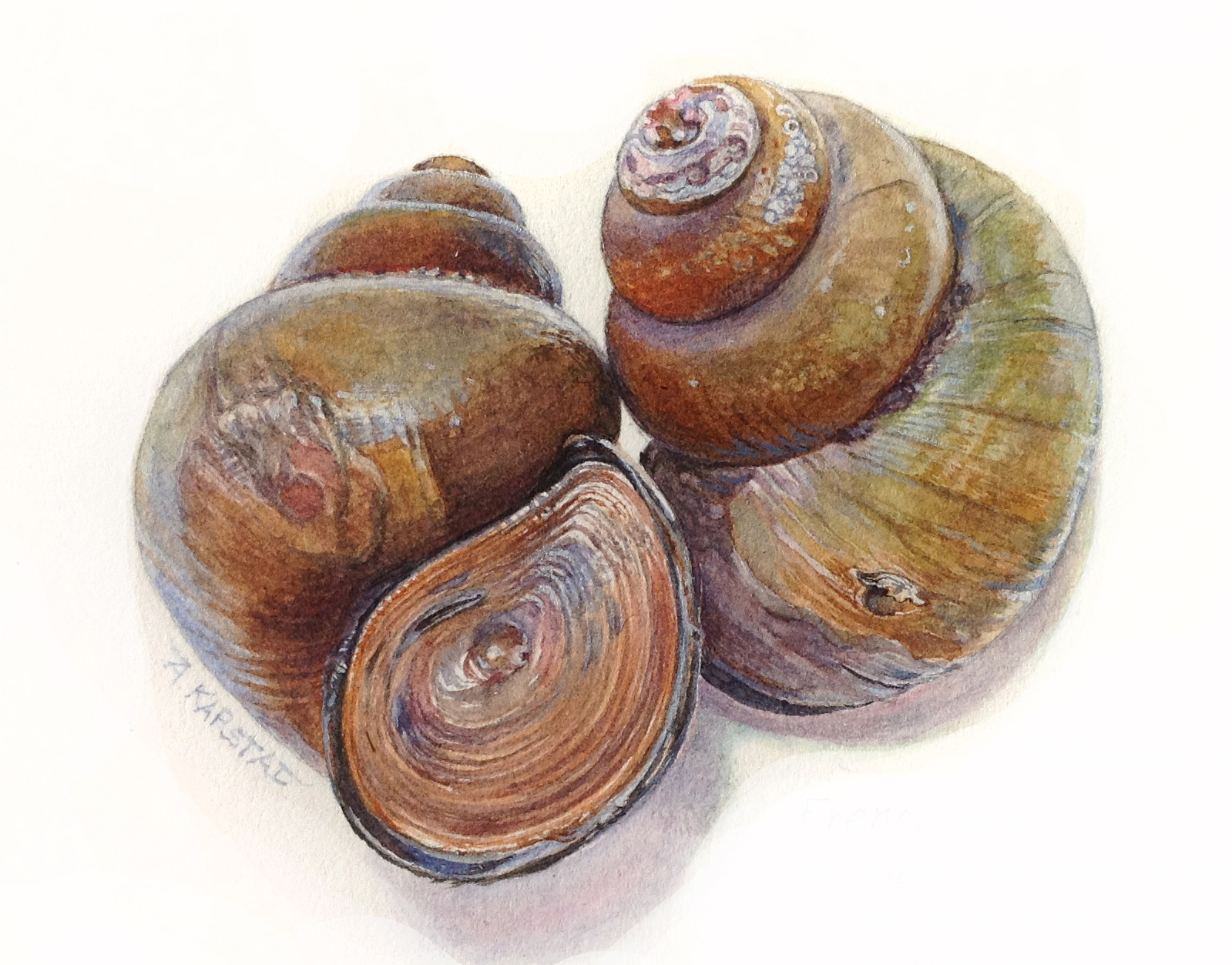
Know Your Macroinvertebrates

The purpose of this post is to put our Introduction to the aquatic “macro” Invertebrates of Southern, especially Eastern, Ontario on line and announce that we’re working on updating it for publication as a book. Our ‘macro’ invertebrates comprise fewer than a hundred species in total, and most are easily learned. These are big animals, and each species has as distinctive an ecological role as does any vertebrate, so it's a valuable asset for anyone to know them as species.... Crayfish use clawed legs and leg-like mouthparts and gills to be generalist predators, scavengers, detritivores, and even filter-feeders, of anything edible. The ciliated gills of Unionid Mussels , in their primordial abundance, stripped plankton, bacteria, and sediment from the water by repeated filtering, and oxygenated sediments by their burrowing. Their use of fish as larval hosts provides the big justification for interest in fisheries, and their life span of decades (perhaps centuries) provides stabili...