How to find edible wild plants

How to find edible wild plants

==========================================================

Field notes of Frederick W. Schueler – 14 August 2002

==========================================================

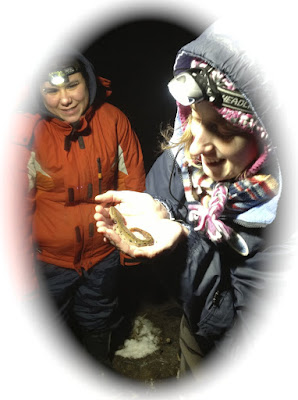
Canada: Ontario: Leeds County: Rear of Leeds & Landsdowne Township: Lyndhurst, Camp Hyanto. 31C/9, UTM 18TVE 110  334,  44.55043N 76.12010W.  TIME: 1230-1700. AIR TEMP: about 33C, sunny, breezy. HABITAT: Red Oak/White Pine church camp slope, Sugar Maple woods, cemetery, weedy lake. OBSERVER: Frederick W. Schueler, Bill Kilfoyle, Hyanto Staff & campers. 2002/181/b, visit. teaching edible wild plants to campers.  This year Camp Hyanto, the Anglican summer camp which we first visited when Rose van der Ham was camp manager in 1996-1997, wound up the summer session with a ‘survival’ week that set out to teach the campers (of both sexes) the he-manly skills of co-operation and wilderness adeptness.

Bill Kilfoyle, doubtless remembering that we stuck him with writing the celebrity blurb for our Lawn Care Manual, had asked me to instruct the campers on the subject of edible wild plants, so he picked me up at 10h20, and I showed him the optimal route between Bishops Mills and Lyndhurst (Buker, Bolton, Branch, North Augusta, Fly Creek, Jellyby=Greenbush=Addison rds, Highway 42, County Road 33).

My presentation was to be one third of the afternoon’s programme, so upon our arrival Bill & I wandered the paths around the camp, checking out the fibrous and wilted potential for teaching wild plants.  After a dining hall lunch of macaroni & cheese with dip & vegetables and lemonade, we sat around in the hot breeze for the campers ‘siesta’ (which was enlivened by toned-down performances of risque Girl Guide songs, and interrupted only by the ambulance removal of one camper who’d suffered sunstroke on a canoe trip).

After all this sitting around I addressed three separate thirds of the camp (colourfully denominated Group 1, Group 2 and Group 3), each for only about half an hour.  One never knows how to begin these talks: instructor from planet Zargon facing off against instructees from planet Zork.  How much of the contemporary media/ government/ religion/ school-propagated caricature of the anthropocentric commercial consumerist does one want to assume in the audience?  And if they hew to this nominally popular creed, how much interest are they supposed to show in what I’ve got to say? For me teaching about eating local greenery is like teaching breathing (‘okay, first you depress the diaphragm while relaxing the intercostal muscles…’), while some of these kids, it turns out, didn’t even know that Blackberries turned reddish as they ripened, or were black when ripe.  On the other hand, about 10% affirmed that they ate Dandelions at home.

So for each group I tried to hit a couple of theoretical high points of herbivory before we went out for a walk:

1) that one couldn’t very well learn to eat wild plants for the sake of rare survivalist events, since there were so many species to know, and each part of each species was vulnerable to human consumption for such a brief season.  Better that one lived with one’s flora, using what one could, as a matter of gustatory delight and of integration with one’s environment.  And the way to learn about the edibility of species (assuming parental ignorance) was by immersion in some of the excellent books on the subject, especially Lee Allen Peterson’s Field Guide.  I proposed that an appropriate measure of the human standard of living is the percentage of one’s diet uncultivated plants comprise, as a sign of the freedom one has to harvest them…

2) that since wild plants live for themselves, their universal goal is to minimize herbivory, unlike cultivated varieties that have been artificially selected for tender tastiness; that the defences of the wild plants are largely flavour and fibre (spine-defended species weren’t conspicuous), and that every flavour is the plant’s attempt to be toxic to some herbivore, and that mincing, mixing and cooking were our responses to these defenses, and these same responses were employed by foraging ruminants (television entertainment was invented, after all, only as a sop to those who didn’t have the opportunity to watch Goats forage)…

Since the times were short, and there were relatively small amounts of some species available, each group visited a different mix of species.   The campers showed a striking enthusiasm for eating these late-summer productions, defended by fibre and secondary plant compounds, including what I’d have regarded as sub-palatable stages of leaf and fruit….

SPECIES LIST:

Typha x glauca (Hybrid Cattail),  dominant along shore of Lyndhurst Lake in tough mats – torn apart and softer bits devoured by campers;

Vitis riparia (Frost Grape),  leaves eagerly eaten – ripe fruit and green devoured like M & M candies;

Taraxacum officinale (Common Dandelion),  wilty tough leaves willingly eaten;

Plantago major (Broad-leaved Plantain),  tough leaves sampled with Dandelions;

Oxalis acetosella (Wood-sorrel),  eagarly eaten;

Juglans cinerea (Butternut),  half-ripe fruit from one healthy tree passed around and sniffed;

Hemerocallis fulva (Day Lily),  tough leaves chewed on & pronounced ‘not bad’;

Arctium minus (Common Burdock),  leaves willingly eaten as an example of a chemically defended plant;

Rubus cf canadensis (Canada Blackberry),  fruit wildly popular;

Smilax herbacea (Carrion Flower),  noted in a thicket but not sampled;

Quercus borealis (Red Oak),  common with moderate acorn crop;

Carya cordiformis (Bitternut Hickory),  saplings common in understorey – some adult trees with green nuts;

Juglans nigra (Black Walnut),  saplings growing as if feral or wild.

…and this list doesn’t include many species that I discussed and pointed out as edible, but weren’t eaten.

published as: Schueler, Frederick W. 2004. Surviving at Camp. Burnt Toast 2(2):7-8.